
In India, when I go to a local shop to buy T-shirts, joggers, sweatshirts, and hoodies, the sellers usually focus on the design and quality of the material during our conversation, but they rarely mention the term “GSM.” However, with the rise of online shops, I’ve noticed the terms 180 GSM, 260 GSM, and 320 GSM being frequently mentioned in the product features. Today, let’s delve into what “GSM” is all about.

1. What does “GSM” actually mean?
Have you ever been to a photocopy or Xerox shop in India? If you are observant, you might have noticed numbers like 75 GSM, 100 GSM, etc. written on the edge of Xerox papers in red, green, or black colours, depending on the paper brand. You might have also heard the seller mentioning these numbers while negotiating the price for a ream of 500 pages for your printing needs. The cost of the paper increases with a higher GSM.
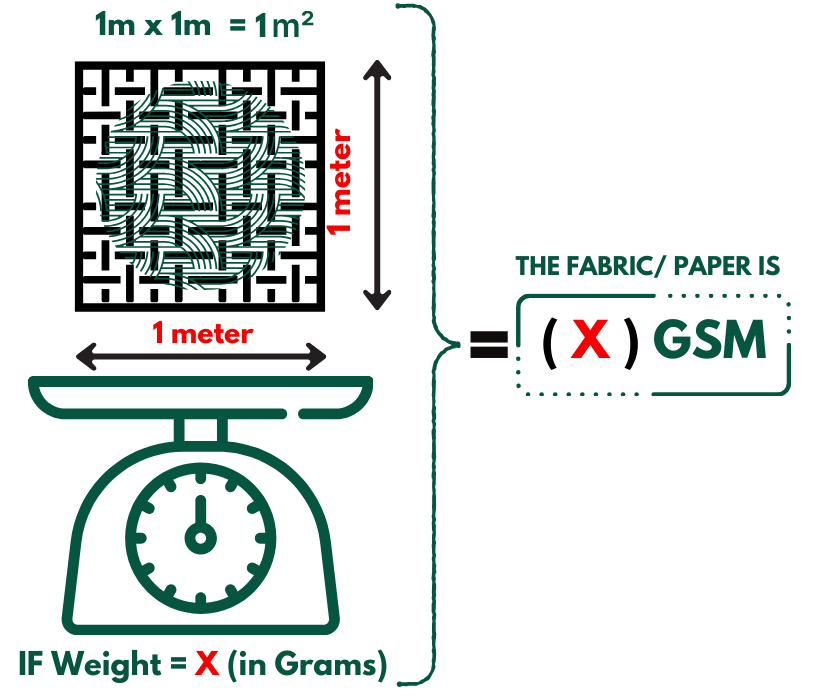
Similarly, in the clothing industry, “GSM” stands for “grams per square meter.” It’s a way to measure the weight and thickness of fabric or paper. Here’s a simple breakdown:
Grams: This tells you how much the fabric weighs.
Square Meter: This is the size of the fabric you’re measuring.
So, for example, if a fabric has a GSM of 200, that means each square meter of that fabric weighs 200 grams. In practical terms—for instance, denim has a much higher GSM than chiffon.
A higher GSM usually means the fabric is thicker and heavier, like a winter coat material, while a lower GSM means it’s lighter and thinner, like a summer T-shirt.
In essence, GSM helps you understand how heavy or light the fabric is, which affects the feel and durability of the clothing.
Another unit of measurement similar to GSM is ounces per square yard. However, GSM has become a global standard because it provides a clear, metric-based system that is easy to understand and apply.
In summary, GSM came into existence as a practical solution to standardise the measurement of fabric density, making it easier for everyone in the textile industry to communicate about and compare different types of fabric.
2. Why am I supposed to know about it?

got to know something new ….bro